Dallas Kitchen Hood System Repair & Rebuilds
Need to fix or replace your kitchen hood system?
Something’s off with your hood system. Maybe the exhaust fan sounds like it’s about to launch itself off the roof. Maybe your kitchen is fogging up during the dinner rush and your cooks are dripping sweat. Or maybe the fire inspector just handed you a list of problems and a deadline. Whatever brought you here, we can fix it. Dallas Hood Cleaning handles every kind of commercial kitchen hood repair and rebuild you can think of. Exhaust fan motors, ductwork, baffle filters, fire suppression systems, makeup air units, grease containment, wiring, controls, and full system tear-down-and-rebuild jobs. We work on restaurants, hotels, food halls, ghost kitchens, school cafeterias, food trucks, and any commercial kitchen in the DFW area that has a hood over a cooking surface. We’re not going to sugarcoat it. Hood system problems get worse the longer you wait. A rattling fan today is a dead motor tomorrow. A worn-out belt turns into an overheated bearing that warps your shaft. And a dirty, damaged system that isn’t up to NFPA 96 code can shut you down, void your insurance, or worse, start a fire. So let’s get it handled.
Exhaust Fan Repair and Replacement in Dallas
The exhaust fan is the engine of your whole ventilation system. It’s what pulls smoke, heat, grease vapors, and cooking fumes up through the hood, through the ductwork, and out the top of the building. When it dies, your kitchen is done until it’s fixed. There’s no workaround. We see exhaust fan problems all year round in Dallas, but especially in summer. When it’s 105 degrees outside and that fan is baking in the Texas sun on your rooftop, every component is under stress. Bearings dry out. Belts crack and snap. Motors overheat. Grease that’s built up on the fan blades throws the whole thing off balance, which grinds down the bearings even faster. It’s a cycle, and it catches up with everybody eventually.
Exhaust Fan Motor Replacement
The exhaust fan motor is usually the most expensive part of the fan assembly, and it’s the one that fails the most often in commercial kitchens. Signs that your motor is going out include the fan running slower than usual, tripping the breaker, making a grinding or humming noise, or just not turning on at all. We carry common motor sizes on our trucks so we can swap them out fast. For less common setups, we can usually source the right motor within a day or two through our manufacturer relationships.

Exhaust Fan Belt Replacement
A snapped or worn exhaust fan belt is one of the most common (and cheapest) exhaust fan repairs out there. The problem is that most people don’t notice it until the fan stops moving air entirely. By that point the kitchen is already getting smoky and hot. We recommend replacing your fan belt during every hood cleaning. It’s cheap insurance and it keeps you from having to make an emergency call at 6 PM on a Saturday.
Bearings, Pulleys, and Shaft Repairs
If your fan belt keeps wearing out faster than it should, there’s usually something else going on. A rusted or misaligned pulley will chew through belts. Worn-out bearings create friction and vibration that damages the shaft over time. We diagnose the root cause, not just the symptom, so you’re not replacing the same belt every three weeks.
Exhaust Fan Hinge Kit Installation
NFPA 96 requires that upblast exhaust fans be hinged with a hold-open retainer so technicians can safely access the fan for cleaning and inspection. If your fan doesn’t hinge open, it’s a code violation and it also makes proper cleaning nearly impossible. We install NFPA-approved hinge kits on all types of rooftop exhaust fans. It’s one of those jobs that seems small but keeps you out of trouble with inspectors and makes every future cleaning go smoother. If your exhaust fan is making noise, not pulling air like it used to, or vibrating hard enough to rattle the hood below, call us. These things don’t fix themselves and they always get worse. Call us and we’ll get it fixed.
Commercial Kitchen Hood Ductwork Repair, Replacement, and Modification
The ductwork is what connects your hood to your exhaust fan. It runs through walls, ceilings, chases, and up to the roof. It carries grease-laden air, so it has to be welded tight, properly sloped, and built to withstand heat. When ductwork fails, it can leak grease into walls and ceilings, reduce airflow, create fire hazards, and put you out of compliance with fire code. These are all things our team of licensed professionals at Dallas Hood Cleaning can repair.
Duct Seam and Joint Repairs
Over time, the seams and joints in your grease duct can crack, separate, or lose their seal. This is especially common in older Dallas buildings where the original ductwork has been through decades of thermal cycling. Hot during service, cool overnight, repeat forever. That expansion and contraction eventually opens up gaps. We reseal with high-temperature sealants rated for grease exhaust and reweld joints that have failed.
Access Panel Installation and Repair
NFPA 96 requires access panels on your ductwork so the system can be properly inspected and cleaned. The 2025 update to the code actually increased the number of access points required. If your system doesn’t have enough access panels, or if the existing ones are rusted shut, damaged, or improperly sized, we’ll cut in new ones and make sure they’re up to current code. This matters more than people think. Without proper access, your hood cleaning company can’t actually clean the duct, which means grease builds up in the sections nobody can reach.
Ductwork Replacement and Rerouting
Sometimes ductwork is too far gone to repair. Heavy corrosion, structural damage, improper installation from a previous contractor, or a kitchen layout change that makes the existing duct run impractical. We fabricate and install new grease duct to NFPA 96 specs with continuous liquid-tight welds, proper slope, and adequate access for future cleaning.
Ductwork for Kitchen Expansions
Expanding your kitchen or adding new cooking stations? Your existing ductwork probably wasn’t sized for the extra load. We calculate the required exhaust volume for your new layout and either modify or replace the duct run so your system can handle the increased demand without choking.
Restaurant Hood Canopy Repairs and Rebuilds for Commercial Kitchens
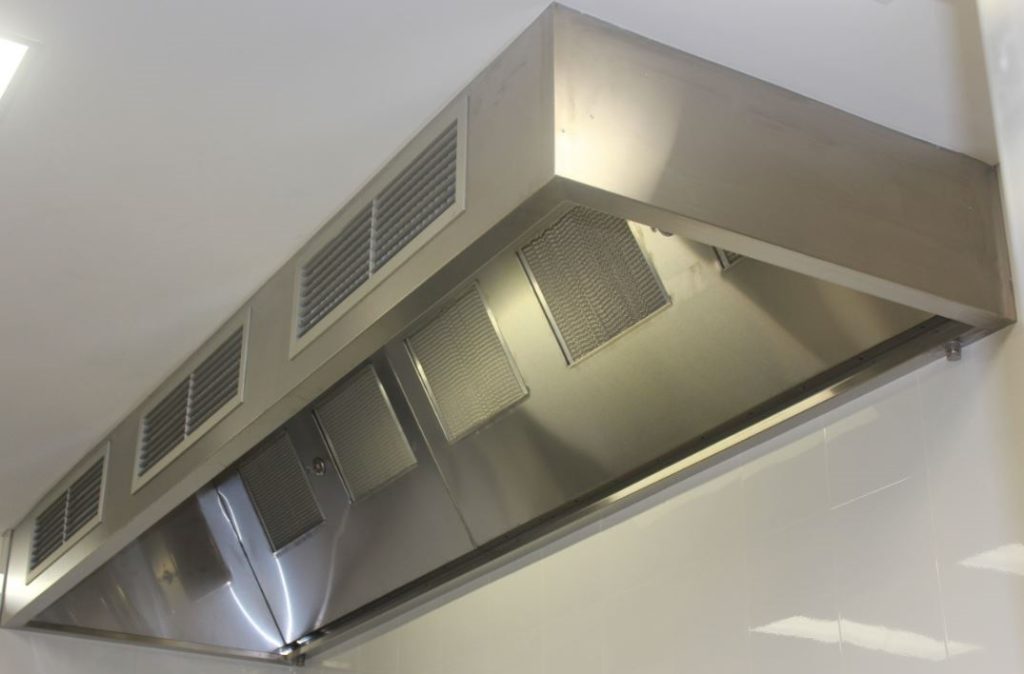
The hood canopy is the big stainless steel piece hanging over your cooking line. It’s the first thing that captures smoke, steam, and grease vapors before they get pulled into the duct. When the canopy is damaged, warped, rusted, or improperly sized, the whole system suffers.
Wall-Mounted Canopy Hood Repairs
These are the most common type of commercial hood. They’re mounted against the wall behind the cooking equipment. Common problems include warped grease trays, cracked weld joints where the hood meets the wall, damaged filter housings, and rust. In Dallas kitchens that do a lot of frying and grilling, we also see a lot of grease overflow from undersized or clogged grease gutters. We repair the structural components, replace grease troughs, and rebuild the filter housing so everything seats properly again.
Island (Center) Hood Repairs
Island hoods hang from the ceiling and capture from all four sides. They’re more complex than wall-mounted hoods because they require more precise airflow balancing and usually have more complicated ductwork routing. If you’re having capture problems with an island hood (smoke escaping, grease landing on the floor, uneven airflow), we can diagnose whether it’s a hood problem, a duct problem, or a makeup air issue and fix accordingly.
Hood Light Repair and Replacement
This one’s simple but it matters. Your cooks need to see what they’re doing. Hood lights take a beating from heat, grease, and steam, and the fixtures and wiring corrode over time. We replace bulbs, fixtures, and wiring as needed.
Full Hood Canopy Rebuild
If your hood is 15+ years old and showing serious rust, structural warping, or has been patched one too many times, it might be time for a full rebuild. We remove the old canopy, fabricate a new one to your kitchen’s specs, and install it with proper weld joints, grease gutters, filter tracks, and lighting. A new hood also gives you the chance to right-size the system if the kitchen has changed since the original was installed.
Baffle Filter Replacement and Repair
Baffle filters are the first line of defense in your restaurant hood system. They sit in the bottom of the hood and catch grease before it can travel into the ductwork. When they’re damaged, missing, or the wrong type, grease goes straight into the ducts and fan, which means faster buildup, higher fire risk, and a system that clogs up way sooner than it should.
When to Replace Your Filters
If your baffle filters are bent, warped, rusted, or they’ve lost their original shape, they’re not doing their job. Filters that don’t sit flush in the track let grease bypass them entirely. And here’s one that catches people off guard: NFPA 96 requires that all baffle filters be UL-listed. If yours don’t have a UL or ETL stamp on the frame, they’re not code-compliant and they need to go regardless of condition.
Mesh Filter Removal and Replacement
Mesh filters are not allowed under NFPA 96 unless they were evaluated as an integral part of a specific listed hood. If your kitchen is still running mesh filters, you need to switch to proper UL-listed stainless steel baffle filters. We see this more than you’d think in older Dallas restaurants that haven’t updated their systems in a long time.
Filter Housing and Track Repair
Sometimes the filters themselves are fine but the housing or track they slide into is damaged. Bent tracks, missing clips, or a warped filter frame means the filters won’t seat properly and grease will slip past. We straighten, repair, or replace the filter housing so everything locks into place the way it should.
Fire Suppression System Repair and Upgrades
Your kitchen fire suppression system is the last safety net between a small flare-up and a total loss. It’s not optional. Dallas fire code requires a functioning fire suppression system in every commercial kitchen, and NFPA 96 lays out exactly how it needs to be installed, maintained, and tested.
UL-300 Compliance Upgrades
This is a big one. The 2025 NFPA 96 update eliminated the grandfather clause for older fire suppression systems. That means if your system was installed before UL-300 testing standards became the norm, it now has to be brought up to current spec. No exceptions. For kitchens in older Dallas buildings, this could mean replacing nozzles, updating the agent tank, or in some cases, a full suppression system redesign. We handle the whole process from inspection to installation.
Nozzle Replacement and Repositioning
Suppression nozzles need to be aimed at specific zones: the hood plenum, the duct entrance, the cooking surfaces, and the fryer. If your kitchen layout has changed since the suppression system was installed (new fryer position, different equipment, added cooking stations), your nozzles might not be covering the right areas anymore. We realign and replace nozzles to match your current setup.
Fusible Link Replacement
Fusible links are the heat-activated triggers in your suppression system. They melt at a set temperature and trigger the system to discharge. Over time, grease contamination and heat cycling can degrade them. They need to be replaced at least every six months per code, and more often in high-volume kitchens. We swap them out during routine service visits.
Manual Pull Station Repair
Every kitchen suppression system has a manual pull station that lets someone trigger the system by hand in an emergency. If it’s been painted over, blocked by equipment, rusted, or simply doesn’t work, that’s a serious code violation and a serious safety risk. We repair, replace, and relocate pull stations as needed.
Gas Shutoff Interlock Repair
When your fire suppression system activates, it should also shut off the gas supply to your cooking equipment. That’s done through an interlock valve. If that valve is stuck, disconnected, or wasn’t properly installed in the first place, your gas keeps flowing during a fire event. We test, repair, and replace gas shutoff interlocks to make sure they work when they need to.
Makeup Air Unit Repair and Installation
Makeup Air Fan Motor and Belt Repair
Motors burn out, belts snap, bearings go bad. If your makeup air unit stops working, your kitchen airflow goes sideways fast. We carry common parts and can get most makeup air fans running again same-day.
Heated Makeup Air Repair
In the winter (yes, Dallas does get cold sometimes), heated makeup air units keep your kitchen from flooding with freezing outside air every time the exhaust kicks on. If the heating element or gas burner in your makeup air unit fails, your cooks are going to be miserable and your kitchen temps are going to be all over the place. We service both gas-fired and electric heated makeup air systems.
Air Balancing
If your kitchen has drafts, doors that slam shut on their own, or smoke that won’t stay under the hood, the airflow is probably out of balance. This can happen after equipment changes, duct modifications, or if the makeup air unit and exhaust fan are running at different speeds. We measure the airflow at multiple points and adjust the system until the pressure is right.
Hood System Electrical, Wiring, and Control Panel Repairs
Behind every hood system there’s electrical work: fan motors wired to switches, suppression systems wired to gas shutoffs, variable frequency drives controlling fan speed, and thermostats monitoring duct temperatures. When the electrical side fails, the whole system can go down or, worse, create a safety hazard.
Fan Control and Switch Repair
If your exhaust fan won’t turn on, the issue might not be the motor at all. It could be a bad switch, a tripped breaker, a blown fuse, or corroded wiring. We troubleshoot the electrical path before we start pulling apart the fan.
Variable Frequency Drive (VFD) Repair
VFDs let you control exhaust fan speed based on cooking load and temperature. They save energy and reduce wear on the motor. But when a VFD fails (power module burnout, programming corruption, sensor communication errors), your fan is either stuck at one speed or not running at all. We diagnose and repair VFD issues and reprogram the controls when needed.
Duct Temperature Sensor Replacement
Some hood systems use temperature sensors in the ductwork to trigger alarms or adjust fan speed. If a sensor fails or gives bad readings, it can cause false alarms or prevent the system from responding to a real overheat situation. We replace faulty sensors and verify calibration.
Full Kitchen Hood System Rebuilds in Dallas
Sometimes the system is too far gone to keep patching. Or the kitchen has changed so much that the original hood system just doesn’t fit the operation anymore. When that happens, we do full rebuilds. A complete rebuild means we evaluate your kitchen’s current cooking equipment, layout, and volume, then design and install a hood system that actually matches what you’re doing today. That includes the hood canopy, ductwork, exhaust fan, makeup air, baffle filters, grease containment, fire suppression, and all the electrical and controls. Everything from the cooking surface to the rooftop, built to NFPA 96 and local Dallas fire code. If you need it, call our team for a free estimate and we’ll get it done quickly and safely.
When a Rebuild Makes More Sense Than Repairs
There are a few situations where a rebuild is the smarter move. If the hood system is more than 15 years old and showing extensive rust or structural damage, repairs are just going to keep piling up. If you’ve changed your cooking equipment or kitchen layout significantly since the system was installed, the hood and duct probably aren’t sized right anymore. If you’re taking over a restaurant space from a previous tenant and their system wasn’t maintained, it’s often cheaper to start fresh than to bring a neglected system back to life. And if you’ve just failed a fire inspection with a long list of violations, a rebuild can address everything at once instead of chasing problems one at a time.
Kitchen Expansion and Renovation Hood Work
Opening a second cooking line? Converting a prep area to a live cooking station? Adding a wood-fired grill or charbroiler? All of that changes your ventilation requirements. We design additional hood systems or modify existing ones to handle the new capacity, including calculating CFM requirements, running new ductwork, and making sure your makeup air keeps up.
Emergency Hood System Repair in Dallas
When your exhaust fan dies at 5 PM on a Friday, you can’t wait until Monday. Your kitchen fills with smoke, your fire suppression may be compromised, and you’re legally required to stop cooking until the system is operational. We get that. That’s why we offer emergency repair service for commercial kitchens across Dallas and the surrounding DFW area. Common emergency calls include dead exhaust fan motors, snapped belts, fire suppression system malfunctions, grease leaks from failed duct seals, and tripped electrical systems. We stock the most commonly needed parts on our trucks and can get most kitchens back up and running the same day.
Why Choose Our Team for Your Repairs
We’ve been inside hundreds of commercial kitchens across Dallas. We’ve seen everything from brand-new build-outs that were installed wrong to 30-year-old systems held together with duct tape and optimism. What we bring to every job is simple: we know these systems inside and out, we fix the actual problem instead of just the obvious one, and we make sure everything is up to code when we leave. We also carry fire extinguishers rated for grease fires, replacement filters, fan belts, and other supplies. So if you need a repair and some preventative gear at the same time, we’ve got it all on one trip.